These practical strategies are designed to help teachers support children with a range of neurodivergent profiles and mental health needs. Developed by educator and wellbeing consultant Alis Rocca, they offer classroom-ready ideas for building trust, reducing anxiety, and helping every child thrive. You can download them as a PDF below.
ADHD
Space — Find a space with the child that helps reduce sensory overload. Ask them what would work for them and create the space together so they feel ownership of it.
Movement — Use whole-class movement breaks such as Go Noodle or Joe Wicks 5-minute move videos on YouTube, so as not to draw attention to one child who needs to move. Agree on monitor jobs with all children and ensure the child who may need to move has a job you can initiate when needed — for example, taking a message to a colleague next door who has agreed to have a brief chat with them, giving them some time out. Create a 'brain break' schedule as part of their timetable and a 'brain break' box with carefully chosen resources that will help to calm and refocus. Ensure ground rules have been agreed in advance.
Information chunking — Use visual timetables, task management boards, now-and-next boards, charts and timers to break large pieces of information into manageable chunks, helping to develop focus and self-regulation.
Strengths and targets — Build meaningful relationships so that you can identify strengths and create targets together with the child. Ask them how they enjoy learning and plan to engage them through a variety of methods.
Organisation — Share your timetable (including the visual timetable) with the family to ensure the child has support in remembering what resources are needed on which day. This will help reduce anxiety. Make sure the locker or peg is at the end of a line. Have small groups of children use the locker area at one time so that it is not overly stimulating. Online learning platforms can help provide information for families so the child can be supported with home learning.
Notice and praise — Support the child in learning to self-regulate by noticing any triggers or early warning signs and adapting your teaching as necessary — for example, offering a fidget toy or movement break. Ensure praise is specific and easy to understand; repeat it to make sure it is heard and ask if it is understood. This makes it far easier for the child to repeat the desired behaviour. Encourage children to notice and understand their own feelings, recognise the choices available to them, and understand that they can make the right choice for their own safety and the safety and respect of others. A pre-agreed signal can help — for example, a card the child turns over at the front of their table to indicate they need some time out. Mindfulness breathing techniques such as '5 finger breathing' or 'petal breath' can also be helpful, as can a glitter bottle (a sealed plastic bottle filled with glitter, oil and water — satisfying to shake and to watch).
Anxiety
Respond in the moment — Offer support to a child at the time they are feeling anxious. Your response as a teacher should be led by the child. Use mindfulness techniques such as breathwork, mindful colouring, or meditation where appropriate.
Create a calming corner or box — This area should be created together with the child. It is easy as adults to assume we know what a child will find calming; instead, ask them. Invite the child to bring in something from home to add to the corner — a photograph, a special cushion, anything that triggers a relaxation response. Creating a matching box at home means the child feels supported in both environments and becomes familiar with the process. This also shows the child that their teacher understands their anxiety and is actively working to support them — a powerful way to build trust and relationship.
Managing anxiety — Share the day's timetable (both verbally and visually) at the start of each day so an anxious child knows what to expect. If changes occur, give as much notice as possible, return to the visual timetable and update it — preferably with the child, explaining the reason for the change. This is often enough to support an anxious child and helps them grow trust in their teacher and learn to live with change.
Use a check-in board — Children have a name tag they can move on a board to indicate whether they are 'fine', 'a little worried but able to work through it', or 'need to talk now'. This should be checked regularly throughout the day by the adults in the classroom and responded to appropriately.
Use worry monsters — Worry monsters are a useful tool for a child to use with a trusted adult as part of the process of easing anxiety. The child talks through their worry with the adult, the monster 'devours' it, and together they come up with strategies to help move forward.
Develop self-regulation — Rather than constantly reassuring a child with anxiety, the goal is to develop them as self-regulating individuals who have the confidence to notice their anxieties and build the tools to manage them. Coaching can help with this. Use open questions that encourage the child to notice, reflect, think and act for themselves. Help them to name their feelings and emotions using the feelings wheel (Gottman Institute). Once a child can articulate an emotion and notice where in their body they feel it, they are better able to begin to regulate those emotions — with a positive impact on their behaviour and actions.
Autism
Relationship building is key — Develop a relationship of trust with the child by taking the time to find out what they like and do not like about the school day or learning environment. Ask them to share their wishes and feelings, and show them that you are taking their ideas on board by making visible changes. This will help you begin to predict difficult situations that may lead to crisis moments, and put the necessary support in place to prevent them.
Clarity in the 'what' and 'how' of learning — Both the learning objective and success criteria need to be clear in order to map out the learning journey. This helps the child know whether they are on the right track, whether they are getting each step right, and whether the end result will be a success. Breaking down instructions and creating smaller, achievable tasks reduces anxiety, avoids misunderstandings, and helps the child notice their successes along the way — building confidence.
Create a safe space — Work with the child to find a space they consider safe to go to when things become too much. For some this might be a corner of the classroom; for others, the corridor just outside. It could be a tent, a decorated cardboard box, or simply some cushions and beanbags. Add resources that will help trigger a calming response. Encourage ownership by creating the space together.
Create an individual plan or pupil passport — This should be developed together with the child and parents, with ground rules agreed and written up. It should include strategies for times of crisis — for example, an agreed signal that the child is beginning to feel overwhelmed and needs time alone in their safe space. The pupil passport can also include things that are important to the child: their interests, likes and dislikes, as well as strategies and resources that help them learn effectively.
Communication — Share this information with all adults working with the child, including those covering for short periods and midday supervisors who may only be with the child during unstructured parts of the day. Make sure plans are in place for the child to access their safe space at these times.
Obsessive Compulsive Disorder
Emotion coaching — Emotion coaching is a communication strategy that helps children become more aware of their emotions and manage their own feelings, particularly when a child is unable to self-regulate. Dysregulation can lead to increased anxiety and increased obsessive behaviours.
Emotion coaching involves these steps:
- Trigger a calm response — Use something that will begin to calm the child: a favourite toy, picture, trusted adult, or familiar place.
- Help the child recognise their feelings — Talk to the child and begin to name what you can see. Validate and label their emotions; the feelings wheel can be helpful here.
- Set clear limits where appropriate — Share your expectations and make clear what constitutes appropriate and safe behaviour.
- Problem-solve with the child — Develop more effective strategies together and decide what could be done differently next time.
For more information see emotioncoachinguk.com.
Positive relationships — Take time to build a positive, trusting relationship with the child so that you can understand the meaning behind the behaviour that is presenting. Ask what is triggering the behaviour and seek to look beyond it in order to offer support. Use break or lunchtime to talk informally. Mindful colouring activities or a walk outside can create safe, focused spaces for conversation.
Communication with others — Involve the family in discussions to gain further information and find out what strategies work at home. Joined-up thinking and a consistent approach to support will help the child feel safer and cared for.
Depressive Symptoms and Disorders
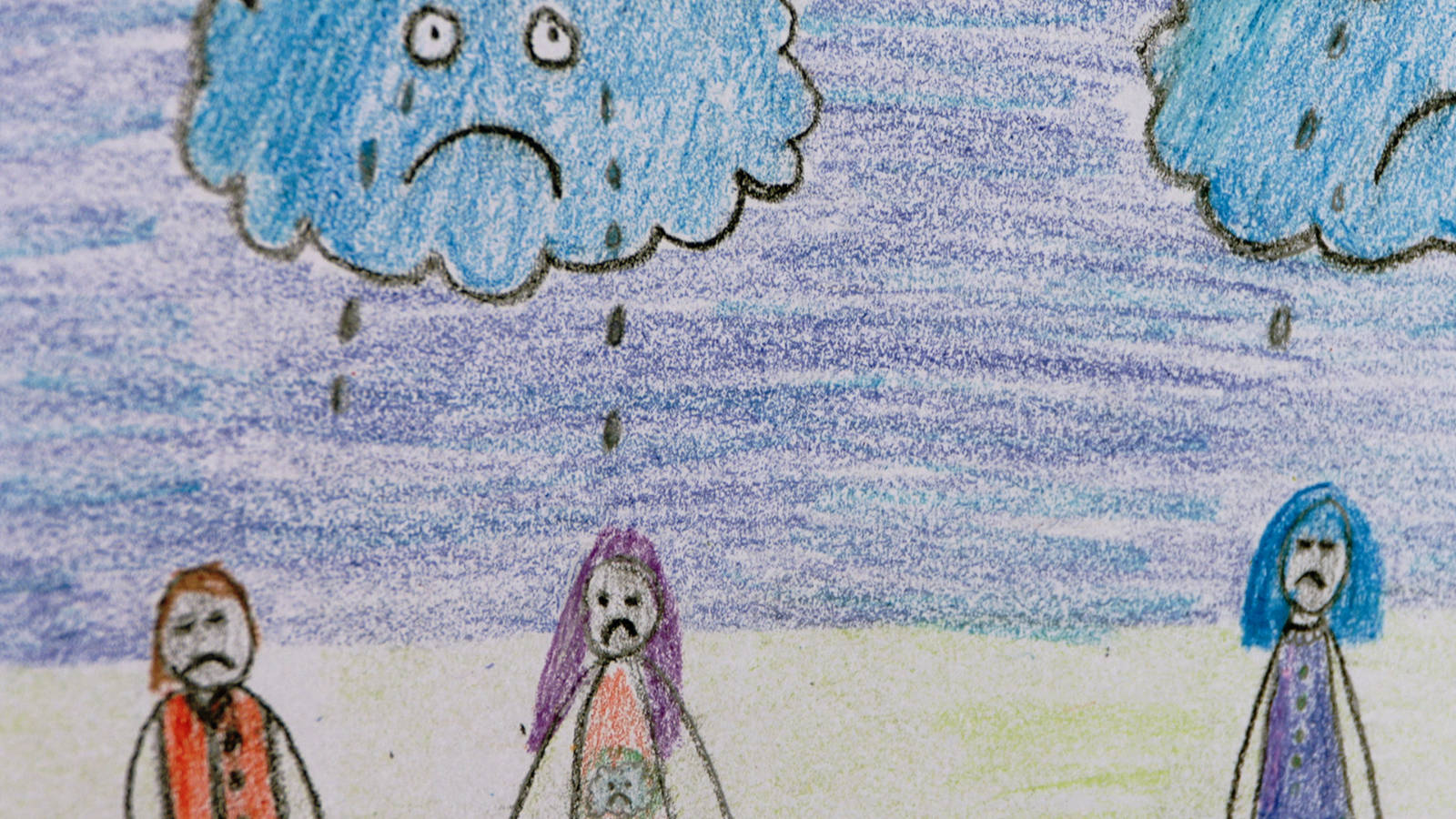
Talking feelings — Some children, especially younger ones, will find it hard to articulate their feelings or link them to a specific situation. They may know they feel unhappy but not know why. Create the right environment and opportunities to talk — for example, through drawing, mindful colouring, or play with small-world resources.
Check in, check up, check out — Use a feelings check-in board with the whole class so you can gauge the mood of all children. Children move their name tag to different areas as they come into the classroom: 'fine', 'not fine at the moment but can manage myself', or 'not fine and need to talk'. This needs to be checked by adults and responded to appropriately. Check in with the child in the morning, check up mid-way through the day, and check out just before they leave. You may notice a pattern that helps you better support the child.
Watch the child — Observing a child in the context of the classroom provides a great deal of useful information. Find the right space by discussing rather than assuming — sitting at the front might be the last thing they want, and sitting at the back may offer comfort. Where it is not possible to observe thoroughly while teaching thirty pupils, delegate to your TA or SENCo, sharing any concerns and strategies clearly so they can provide support in the moment.
Prepare and plan — Create an individual plan so that any adult working with the child — including midday supervisors and supply teachers — is able to offer consistent support.
Buddy systems — Use a buddy system to help support the child at break times. Choose a willing buddy and teach them how to show support and empathy, including ideas for collaborative games. Take the time to model this and check in with the buddy regularly — they will need support too.
Conduct Disorder and Oppositional Defiant Disorder
Behaviour policy — Ensure your school behaviour policy is short, specific and concise. Share it with the whole class and all adults working with the children so that expectations are understood and applied consistently. The policy then acts as a road map for the child, helping them understand and cope with behavioural expectations. Children showing antisocial behaviours can often feel bombarded with instructions; a clear, consistent policy shared by all helps prevent confusion and anxiety.
Words matter — Avoid thinking about children in binary terms — good or bad, positive or negative. Try talking about antisocial and prosocial behaviours instead, and explain that certain behaviours are expected in society in order for it to function. A classroom is a micro-society, and children can learn how to contribute to it collaboratively.
All behaviour is communication — Any behaviour a child shows, whether prosocial or antisocial, is communicating something. Notice the behaviour and consider the reasons behind it or the triggers that have led to it. There may be problems in a child's life that go deeper than the behaviour you are seeing. It is important to continue to set high expectations, support them to behave in line with the school behaviour policy, and seek to understand the cause.
Home and school approach — Liaise with the family regularly so that consistent approaches developed in school are replicated at home, and vice versa. Shared support and collaborative approaches help the child understand expectations and develop trust in the adults helping them.
Emotion coaching — Emotion coaching is a communication strategy that helps children become more aware of their emotions and manage their own feelings and behaviours, particularly when a child is unable to self-regulate and antisocial behaviours result. See the OCD section above for further details.
PTSD
Respond in the moment — A swift response to a child in crisis is essential. Breathing techniques such as petal breathing or five-finger breathing can help a child come into the present moment and calm an anxious or panicked mind. Breathwork can move a child from a fight, flight or freeze response into a rest-and-digest response by triggering the parasympathetic nervous system.
Talking and listening — Many children with PTSD want to talk about their experiences or worries, though not all will be able to articulate how they are feeling — particularly if they are very young or have another diagnosis. Use tools such as drawing, mindfulness colouring, small-world resources or play dough to support them in sharing what they need to.
Social stories — Social stories present information in a literal or concrete way to help a child understand a difficult situation or experience unambiguously. Use them to help a child understand a trauma or their emotional response to it, and to reinforce that they are safe and that trusted adults are there to support them.
Consistency — Make sure expectations of prosocial behaviour are shared and consistent. Notice any triggers that may lead a child with PTSD to show antisocial behaviours and work with them to recognise those triggers or the feelings that precede a crisis. Create a plan and share it with all adults working with the child. Use emotion coaching (see OCD section above) to help a child return to a calm state and develop strategies for the future.
Routines — Share timetables and routines with the child as much as possible to make the day predictable and reduce anxiety. Where unexpected changes occur, share them both verbally and visually, and explain the reason so the child continues to feel safe and in control.
Working together — Plan a meeting with the school SENCo and the child's parents or carers as early as possible. Share strategies that can be used both at home and in school for consistency, and use a communication book, email, or regular meetings to update each other on progress. Offer parents and carers support where appropriate. If the trauma is ongoing, discuss which outside agencies should be involved to support the family and raise any safeguarding concerns immediately with your designated safeguarding lead.