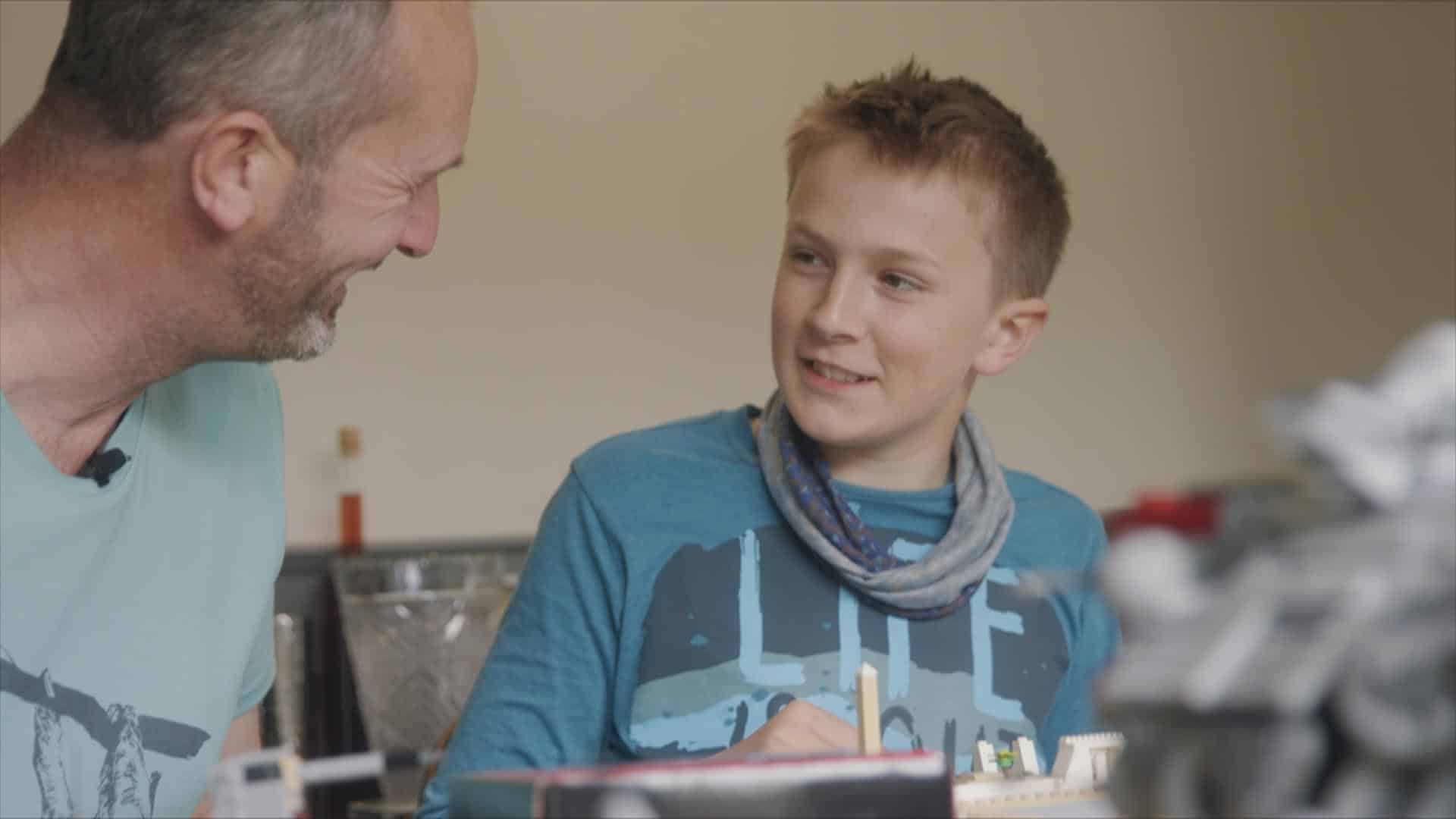
This is a transcript of Nip in the Bud's Film on "Autism: Tips for Teachers presented by Sian Williams.
Tips for Teachers of children with Autism
If you're watching this film then you probably have a child in your class with a diagnosis of Autism Spectrum Condition. Here are some tips you can use in your classroom straight away, that may help to support that child and their learning. Children on the autism spectrum are as varied in their strengths and difficulties as anyone else in the population.
However, they often experience acute levels of anxiety, as a result of speaking a different social language to their peers and teachers, which can be a lonely and isolating experience.
Tip 1: What you see in the classroom is not necessarily what you get.
Be aware of how challenging school is. Some children will be putting on a mask to hide their difficulties, other children will have extreme behavioural meltdowns over transitions, sensory overload, social missteps or changes in routine. Whether it's obvious or not, be aware that school life for a child on the spectrum is often a daily ordeal.
Tip 2: Create a pupil passport.
Create a pupil passport for autistic students. Children on the autism spectrum may struggle to navigate the school building, remember their belongings and record homework efficiently. Create an individualised plan or pupil passport with your pupil and their parents or carers, which has information and strategies to help them.
Talk through the child's pupil passport with colleagues, explaining the correct approaches that have been put in place to help them. This close communication between staff, as well as between home and school, will reduce anxiety in the student and increase their engagement in education.
Sensory overload, social exhaustion & quiet time
Tip 3: Take a break.
Children on the spectrum will need moments of respite from sensory overload and social exhaustion. Create a safe space in your classroom or nearby, designed with the child, rather than for them. Your pupil can use their passport to signal a need to take time to self-regulate. Some schools have a learning hub, others have quiet rooms where children can eat their lunch, and are not forced to brave the lunchroom or playground.
Be aware of undiagnosed learning difficulties in autistic children
Tip 4: Be aware of undiagnosed learning difficulties.
Children on the autism spectrum can have average or above average skills in some areas, but deficits in others. Specific learning difficulties can impact on processing information, reading, writing, or being able to perform mathematical calculations quickly enough.
Autistic children need clarity
Tip 5: Go for clarity.
Use explicit lesson objectives with clear success criteria, to illustrate the learning journey and enable the child to break down the task into achievable steps. Breaking down instructions into smaller tasks, reduces anxiety and avoids misunderstandings. It helps the child notice their successes along the way and builds confidence.
Visual = confidence & independence
Tip 6: Go visual.
Visual timetables help reduce anxiety, and encourage independence. Visual aids like social stories, infograms or concept cartoons, really help children who are feeling overwhelmed.
Act as the autistic child's social bridge
Tip 7: Act as a social bridge for the pupil.
Develop a relationship of trust with the child, by taking the time to find out what they do, and don't like about the school day or the learning environment. Show them that you're taking on board their ideas by making changes they can see. As a result, you'll begin to be able to predict difficult situations, that may lead to meltdowns and put in the necessary support that will help prevent them.
Use social stories to talk the child through any social misunderstandings. Help ensure that they're not victimised by other children, by teaching their peers about Autism Spectrum Condition and talking about and celebrating differences and similarities.