So here we are five years on, aren't we from the first film.
Charlie hadn't seen that until we had a look at it last night, but he enjoyed seeing himself eating that big lollipop and I think he's enjoyed taking part in this film, and he'll be really interested to see the, you know, the eventual product & I think he feels really proud that it's had 21,000 views, impressions - whatever that is - and there's a number of really nice positive comments from other people who found it a useful tool.
He was very eloquent actually I thought in the film, 5 years ago talking about what it's like to be autistic and his sensory overload challenges, and what it's like at school, so I was really you know I was quite - when I was looking back - I was quite struck by that, and the biggest difference between now and then you know he's still autistic, he won't ever not be autistic, but he has learned to cope with it much better.
So all of those sensory overload challenges "It Feels like spiders go walking up and down me, I can hear things, things I can feel things", that's still absolutely the case, but he's much much better at handling it. So he's in some ways he's just as eloquent now as he was then or you know, he demonstrated some really good self-awareness.
What he's developed in that time period is a much better knowledge of how to cope with what happens when he gets a high anxiety level, high sensory levels when he's getting towards having a meltdown. 5 years ago we were having meltdowns, bad behaviour very, very regularly, now it virtually never happens which is just the most fantastic progress.
One of the biggest things is getting diagnosed quickly because otherwise, you don't know um why you're feeling that way so that's a big thing that they should be doing. Some of it is actually about maturity and just being older, bigger, having more body mass. I don't have to worry about Charlie's meal times - has he eaten? Is he misbehaving because of that, he's just got more you know stuff going on, more physical matter and so we don't get those peaks and troughs and blood sugar levels that we would have done.
His school in particular have worked a lot with him on self-regulation and how to manage yourselves, about putting your anger in a box. In particular taking yourself away from the situation and that I think that's probably his biggest tool is just physically moving away from a difficult situation so that he can then calm down, self-regulate and then bring himself back.
One of the biggest issues he'll have and he still has is not understanding some of the subtle social cues, body language, eye contact, voice inflection - you know all of those sorts of things, he doesn't really get that. He's a very straight line, black and white thinker; he can therefore misconstrue some of the conversations he has, especially with peers, that can lead to him thinking he's been teased or being bullied and then he can get quite angry quite quickly - and I think the single biggest thing is that he's able to say I'm getting angry and I'm gonna go, I'm gonna walk away from that situation.
When he then reflects back on those situations where things have gone wrong it's still from a very self-centered point of view:
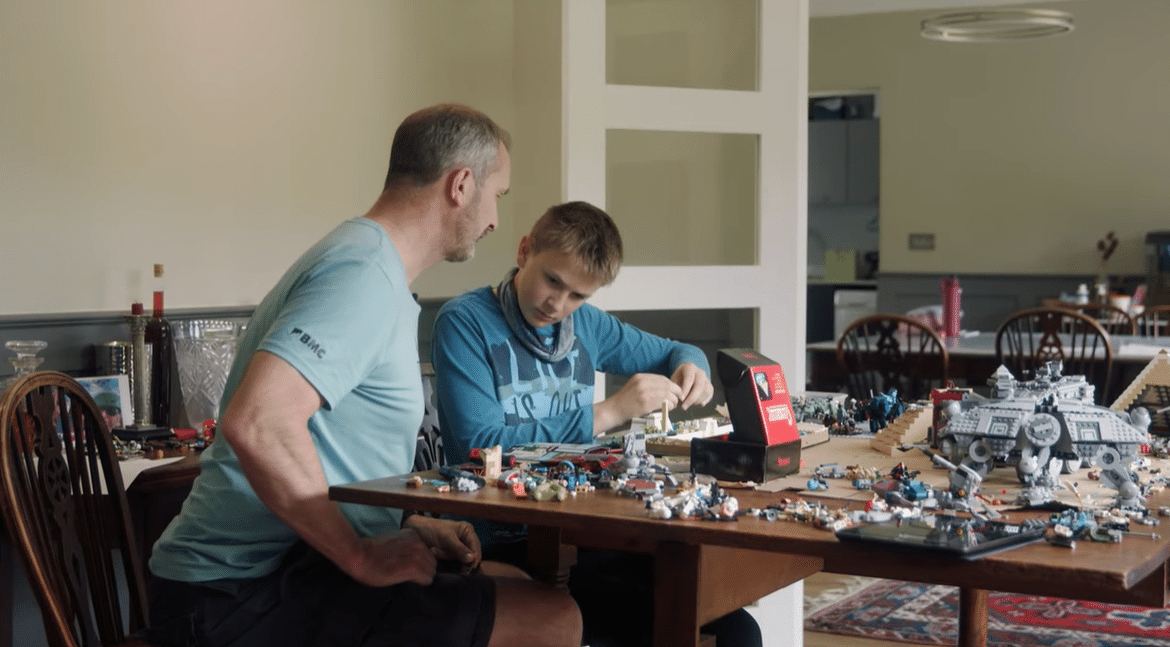
"well how do you expect me to think if X is doing Y with my Lego?"
or something like that, you know, and he forgets literally, he does genuinely, I think, forget all of the things that he did that weren't particularly positive human interactions to get to that place where the other person reacted; so that's his learning now, that's going to be the next stage - is how to be with people and interact with themin a way that is more positive.
So there was a time in Covid where we were in the garden and he was bouncing on the trampoline and he was very angry, very annoyed I said you know:
"What's up why are you so angry?"
and he said
"well there's nothing to do, this flipping pandemic - I can't go to school, I can't go to the swimming pool, I can't go to the Cinema, I can't see anyone there's nothing to do"
and I said
"well you know we've got your bike and you know you've refused to learn to ride a bike, you didn't want to"
Anyway, 20 minutes later he came back to me and he said
"All right then, I will learn to ride my bike"
and of course he'd fallen off a couple of times the year before. This time he got on it straight away and zoom, he was off so we ended up doing about an 8-mile cycle ride over a couple of hours. And then about a year and a half ago he started doing martial arts and I wouldn't say that's a Panacea for all autistic children but it's been really good for Charlie, and I would you know, if I was, when I meet other parents say it might be something to think about.
It's really disciplined so they're absolutely in a square box of rules and you don't go outside that box, so that makes autistic people feel really safe.
Those are the rules, and then to progress you're told what you need to do both in terms of learning philosophies and morals and also you know the physical activity and he loves getting a belt and he probably gets a new belt every three months or so, so he's really progressing.
Yes certificate each time, he's wanting to go to the gym, he's wanting to go for long bike rides, he uses dumbbells most evenings, he wants to actually develop himself physically because he has an aspiration to be really really good at that sport - which is lovely to see.
I mean it's still hard to know what he'll excel at but he is startingto achieve in more things.
Snow Sports, he really enjoys skating, skiing, so you know we're starting to build a little bit more of a repertoire of achievement.
He's at a special school at the moment and he's probably one of the more gifted academic children there.
Well I won a award actually for English I was licensed by an author called Holly Smail if you've ever heard of her which I was pretty happy with so that's one of the reasons and I'm also just generally good at the subject.
I wrote quite a lot in my free time, I did a lot of creative writing
And as he's learnt to manage his behaviour better we feel as though he can probably access a school which is stronger on the academic front and where he will be stretched more and learn more and be working with peers that he can he can learn from.
Yeah well because I'm in a special school like I was saying there's a lot of children who are quite angry all the time which is a problem with the school but that's fine so.
The next step would be back into a mainstream school with some sort of a support wraparound Care programme that we're not quite sure what it is
If he carries on his current trajectory that might only need to be for one academic year and then he could actually, potentially, he could sit in classes
with other children and get on with his learning which you know is quite exciting.
He's engaged, he's interested - I think small class sizes are really important. Culture in the school about not bullying and not teasing is incredibly important
Other parents who might be watching this: I take my hat off to you because it's hard work for us all
You know reach out to others for help. I've got lots and lots of different various parent support networks, WhatsApp groups and others.
I was talking to somebody the other day who's having a really tough time working with the council to get a proper diagnosis of their son who's almost certainly autistic & the one thing I said to her that I'll share on this film as well is: I wish somebody had said to me "look after your marital relationship" because 80% of marriages with autistic children break down.
There's only 20% that survive so it's a much higher uh it's a much higher divorce rate amongst parents of autistic children.
If I was the UK government if there's one thing they could do it's actually, is as soon as somebody gets a diagnosis in their family, try and arrange some sort of
advice, counselling, whatever it might be, marriage guidance for the parents because it puts a huge strain on your relationship.
You need to think about what your expectations are for children and I remember one mum saying to me you know:
We can't be a normal family but we can still be a happy family
you know, we can be a family that does stuff but we probably won't do the sorts of things that I did when I was a kid and we might end up with one child going down that road and another child going down that road but parents of neurodiverse children probably won't end up with a "well-rounded individual" who understands a bit of music and a bit of Science, and a bit of English and a foreign language.
You're more likely to get somebody who specializes in a couple of areas and might end up being absolutely brilliant in those areas you know
All the inventors and scientists and engineers and people who have original thoughts are not people with neurotypical brains, which is one of the reasons why we need to think about education in a much more planful way.
That's something that's very important you have to find out what your happiness is and then just do that.
You know one top tip is have a think about what your aspirations are as a family unit and as a child
Don't put too much pressure on yourselves and don't expect that a neurodiverse child is going to turn into a neurotypical child because they won't.