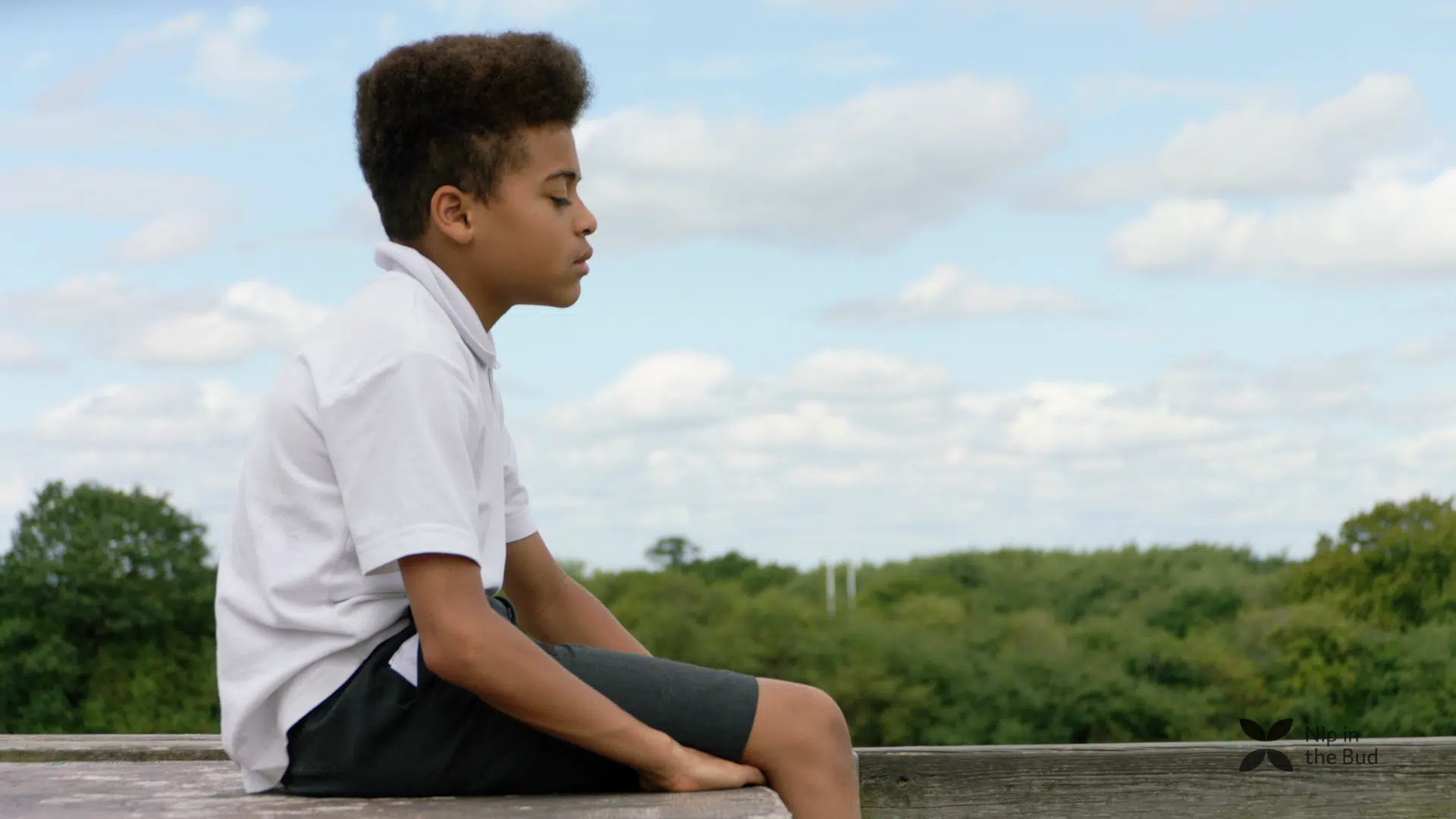
Following our chat with father of seven, Scott Mair on our podcast, here we look his family’s experience of neurodiversity, the emotional toll bullying can take and the empowering potential of homeschooling.
In a revealing episode of the Nip in the Bud podcast, Scott Mair shares the deeply personal story of how bullying in school led his family to reconsider conventional schools for his children’s education. Feeling disappointed with the way he believed his son was left unsupported through a traumatic bullying situation, they decided to embrace homeschooling. They took this leap of faith, themselves learning along the way, in order to better protect their children’s mental health and nurture each of their unique learning needs. Father to seven boys, four with Autism Spectrum Disorder (ASD) and one with dyslexia, Scott’s account sheds light on the emotional toll bullying can take and the empowering potential of homeschooling.
Scott describes the turning point in their journey:
“…by the start of year eight, he was being bullied horrifically and we’d had various trips to A &E. It was very violent, but it was also my introduction… to the darker side of social media …, it follows them everywhere that they go. So it was the constant barrage and bombardment that just became all consuming. And he was in a very dark place.” This traumatic experience profoundly affected their family and shaped Scott’s approach to parenting and education.
So why choose homeschooling?
Scott’s decision to homeschool was driven by the desire to provide a better-suited learning environment for his children. Instead of relying on diagnostic labels or conventional schooling, they chose homeschooling to prioritise the individual needs and well-being of each child recognising their individuality. Scott explained that homeschooling allowed him and his wife Sarah to tailor education to the pace and strengths of each child. They feel that for many parents of children with ASD, traditional schools can’t always provide the right support because of lack of resources or understanding. At home, they were able to create a safe, familiar environment where their specific challenges and interests are honoured.
Scott explains how this personalised approach, although not always easy, has helped to build confidence and independence in his children. Children can be difficult and do not always want to listen to their parents, so finding a balance between the parenting role and being a ‘teacher’ is key. Scott emphasises the importance of truly listening to children’s voices in order to strike this balance effectively:
“It’s more than hearing their words; it’s about understanding their feelings and concerns. When one of my boys says, ‘I can’t do it. I’m so thick. I’m so stupid. I’m useless,’ instead of seeing this as bad behaviour, we reflect and focus on building self-esteem and positive reinforcement. That’s going to take time, but it’s worth it.”
Do all children with ASD learn the same way?
With a focus on building authentic and trusting relationships, Scott was able to observe the unique ways each of his children learned and expressed themselves. This perspective allowed him to move beyond generalisations and appreciate the rich diversity within the autism spectrum. He emphasises:
“My boys have autism; there are parts that are the same, but there’s so much that’s not. Autism is a spectrum. Some thrive with visual aids, others need sensory breaks. Understanding each child’s unique way of learning and allowing space to grow is crucial.” Scott’s experience underscores the importance of understanding each child’s individual learning profile. This profile includes not only their preferred learning styles but also how they process information and interact with their environment. Moreover, this learning profile is not static; it evolves as the child grows and develops. Scott reminds us:
“The difference between a two-year-old with autism and a four-year-old is sometimes very different in that same child. What I believe to be important is that we allow them the space to grow within that space. We allow them to be individuals.” This philosophy calls for flexibility, patience, and ongoing assessment in homeschooling and education. Parents as educators must be willing to adapt their strategies as their children’s needs change, ensuring that learning remains supportive, engaging, and respectful of each child’s individuality. This reminds me of a conversation I had in my podcast episode with educator Lauren Whittaker in which she discusses equity in depth and would be useful to listen to in line with Scott’s thinking.
In practice, this flexible approach might mean experimenting with different teaching and learning methods, incorporating sensory-friendly environments, or pacing learning sessions according to the child’s current abilities and interests. It also involves celebrating small victories and recognising growth in all forms, not just academic achievement.
By embracing the individuality of children with ASD, Scott’s approach offers a hopeful and empowering model for homeschooling. It reminds us that success lies not in making every child fit a rigid mould but in meeting each child where they are—and guiding them toward their fullest potential with understanding and care.
How can I get support and advice on ASD?
We have created a checklist that you may find useful in helping you to better understand how you can identify and meet the needs of your child whilst progressing their learning. You can find this checklist here: Checklist
Seeking advice and support for children with ASD or neurodivergent needs is so useful but can sometimes feel overwhelming. As a starting point you may wish to seek out information and support by using the key resources found here:
- National Autistic Society (NAS) – Provides extensive information, advice, and local support groups specifically for families with autistic children.
- Local Authority SEND (Special Educational Needs and Disabilities) Services – Local councils provide advice, assessments, and support plans for children with special educational needs. You can contact your local council’s SEND department for personalised assistance.
- Home Education Advisory Service (HEAS) – Offers guidance on legal requirements and best practices for homeschooling children with additional needs.
- Autism Education Trust – Provides resources for parents and educators to support autistic children’s learning.
These organisations can provide advice, community support, and practical resources to help you navigate homeschooling your neurodivergent child effectively.
Finding community as a homeschooling parent.
Scott highlights the vital role of community by explaining that homeschooling networks and online groups provide not just learning resources
“… but it gives that social aspect that I think is one of the most important parts of school and we undersell it…” Engaging with local and online networks can help reduce isolation and provide reassurance when you feel unsure about your homeschooling approaches, or simply want to share what is going well, gain ideas, and chat with like minded people.
Organisations such as the previously mentioned Home Education Advisory Service (HEAS) offer guidance around the legalities and the practicalities of educating at home; as well as curriculum and examination information, resources and SEND. Additionally, attending workshops, parent meet-ups, and support networks can help combat feelings of isolation and provide reassurance that you are not alone in your homeschooling journey.
What if I can’t choose homeschooling?
Scott acknowledges that homeschooling isn’t a feasible option for everyone. Many parents face practical barriers such as work commitments, single parenting, or their own challenges like being neurodivergent themselves, all of which can make homeschooling difficult or impossible. These parents often have no choice but to send their children to school, even if they may not feel it is the best environment for their child. This often leads to feelings of guilt and concern.
In our conversation Scott emphasises that he believes systemic changes are needed to make schools a more viable and supportive option for all families, especially those who cannot choose homeschooling. All schools need to recognise that many children, especially those who are neurodivergent or have additional needs, benefit from an alternative to traditional schooling and adaptations can be made within conventional classrooms and teaching approaches to reflect this.
Summary
This episode beautifully illustrates a person-centered, holistic approach advocating for inclusive, supportive environments where neurodivergent children can flourish. The homeschooling journey shared here has been a successful one, allowing Scott to cultivate deep bonds with his children and as a result his family became a very close, supportive unit. Although not always easy, we see how he grew as a home educator learning to balance encouragement with challenge, preparing his boys for learning, for exams, further education, and life beyond childhood through practical and entrepreneurial experiences that were meaningful and child-led.
Listen to this episode to find out more and share with someone you know who may benefit from hearing Scott and his family’s unique journey. Also, read my companion article which delves into my conversation with Scott about the traumatic impact of bullying that led to the choices he made.
Helpful homeschooling resources from Nip in the Bud
Below, you’ll find links to worksheets designed to help you identify your child’s unique needs, enabling you to tailor your teaching for better support. Additionally, there is a weekly planning template and an assessment guide to assist you in organising lessons and tracking learning progress, so you can effectively determine the next steps in your child’s education.
- Worksheet one – Identifying Your Child’s Learning Needs
- Worksheet two – Weekly Learning Plan
- Worksheet three – Weekly Progress Assessment